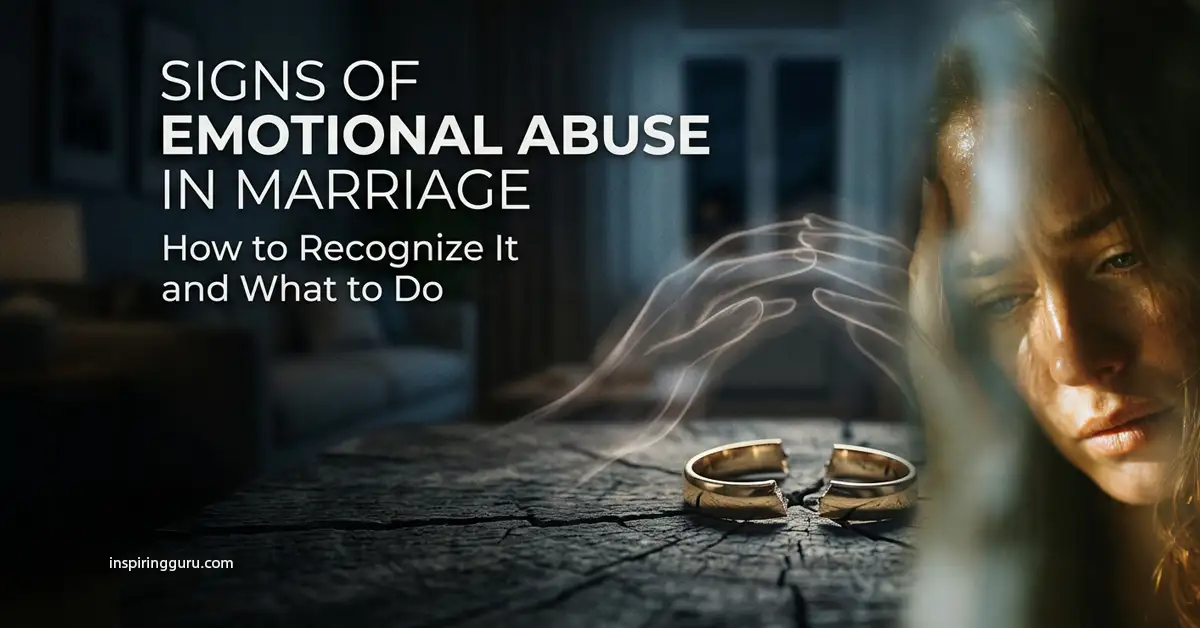
What Is Emotional Abuse?
Emotional abuse is a pattern of behavior meant to control, intimidate, shame, or weaken you mentally. It can include:
- constant criticism or insults
- manipulation and blame shifting
- emotional threats
- gaslighting (making you doubt your reality)
- controlling behavior (money, phone, relationships)
- isolating you from friends or family
Emotional abuse can be gradual, making it difficult to recognize early.
Signs of Emotional Abuse in Marriage (Top 12)
Below are the most common emotional abuse signs. If multiple signs happen repeatedly, it may be a serious concern.
1) Constant Criticism, Insults, or Humiliation
- being mocked, degraded, or talked to like you’re “less than”
- hurtful jokes, sarcasm, or name-calling
- public embarrassment or disrespect in front of others
2) They Don’t Listen—They Only “Prove You Wrong”
- conversations turn into arguments where you’re always “wrong”
- they distort your words
- they dismiss your feelings instead of understanding them
3) Gaslighting (Making You Doubt Yourself)
Gaslighting is when your partner denies or rewrites what happened, such as:
- “That never happened.”
- “You’re remembering it wrong.”
- “You’re too sensitive / overreacting.”
Over time, you may start questioning your own judgment.
4) Control Over Your Life
Emotional abuse often includes controlling behaviors like:
- checking your phone/messages without respect
- monitoring where you go and who you meet
- insisting on approval for decisions
5) Isolation From Friends or Family
A common tactic is separating you from support systems:
- “Your family doesn’t care about you.”
- discouraging friendships or cutting communication
- preventing visits, calls, or social events
6) Your Emotions Are Always “Invalid”
They may minimize your feelings:
- “You’re not allowed to feel like that.”
- “That’s nothing—stop making it a big issue.”
- Your pain is treated like an inconvenience
7) Threats, Fear, or Intimidation
This can be direct or implied:
- threats of divorce, abandonment, or taking away children
- using anger or cold silence to make you comply
- punishments for disagreeing
8) Love With Conditions (Conditional Care)
They may show affection only when you meet demands:
- “I’ll be nice only if you do what I say.”
- apologies that come with new control rules
- affection used as a reward/punishment
9) Extreme Jealousy and Blame
Jealousy may be disguised as “concern,” but becomes abusive when it turns into:
- accusations without evidence
- blaming you for their emotions
- tracking your interactions constantly
10) You Walk on Eggshells
You feel you must be careful all the time:
- afraid to express your thoughts
- nervous before conversations
- changing your behavior to avoid their reaction
11) Pattern of Apologies Without Change
You might hear:
- “I’m sorry.”
- “It will never happen again.” But the same behavior repeats—creating a cycle of harm.
12) You Feel Smaller, Weaker, or Less Confident
Over time emotional abuse can reduce your confidence:
- you feel guilty for normal needs
- you stop speaking up
- you doubt yourself even when you’re right
Common Effects of Emotional Abuse
Emotional abuse can lead to:
- anxiety, depression, chronic stress
- loss of self-esteem
- sleep problems and emotional numbness
- difficulty making decisions
- long-term trauma responses
What to Do If You Suspect Emotional Abuse
If you recognize several of the signs above, here are practical steps:
- Trust your feelings
If something repeatedly harms you, it matters—even if they deny it. - Keep a record
Note dates, incidents, exact words, and how it affects you. This helps you stay grounded. - Build a support system
Talk to a trusted friend, sibling, counselor, or support group. - Set boundaries
Decide what you will not tolerate (insults, threats, monitoring, isolation). - Seek professional help
A therapist or counselor can help you assess safety and regain clarity.
If there is intimidation or fear, prioritize your safety over couples counseling. - Plan for safety if needed
If emotional abuse comes with threats, fear, or escalation, create a safety plan and consider local resources.
If you are in immediate danger, contact local emergency services right away.
FAQ (Short)
Is emotional abuse always intentional?
Often it is a pattern used to control or harm, even if the abuser claims they “didn’t mean it.”
Can emotional abuse happen without yelling or insults?
Yes. It can happen through silent treatment, manipulation, neglect, controlling behavior, or constant invalidation.
How long does it take to recognize emotional abuse?
It can be quick or gradual. Many victims realize it after repeated cycles and effects on mental health.
Final Thoughts
Recognizing the signs of emotional abuse in marriage is the first step toward regaining control of your life. You deserve respect, emotional safety, and kindness—not fear, manipulation, or humiliation.